スキップしてメイン コンテンツに移動

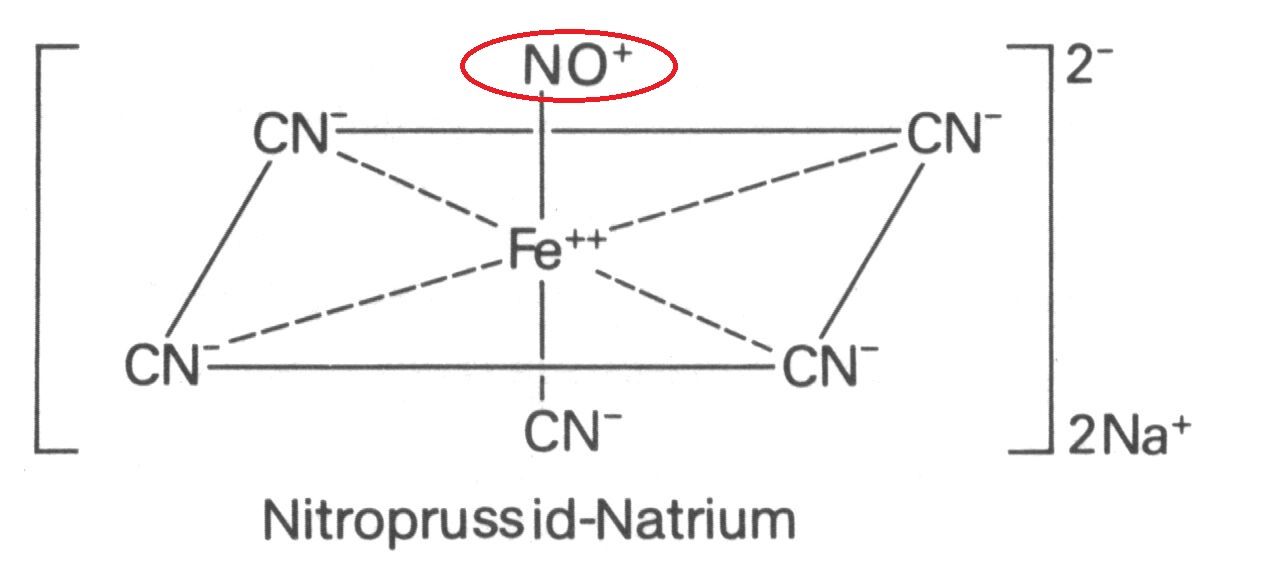
酸化窒素(NO)は21世紀の新しい抗精神病薬となり得るのか。ニトロプルシッド・ナトリウム(Sodium Nitroprusside)にて統合失調症の症状が改善

これが、もし、事実ならば、クロールプロマジン以来の大発見かもしれない。

JAMAの2013年7月に掲載されたばかりの論文を今回は紹介したい。

 精神科と麻酔科は関係が深いようだ。麻酔薬の中に精神科治療のヒントが隠されているのかもしれない。クロールプロマジンは麻酔薬からの発見であったが、今回も同じように麻酔の際に使用される薬物からの発見である。うつ病で速効性を発揮するケタミンが同じく麻酔薬(静脈麻酔剤)であったように、今回のニトロプルシッドも麻酔薬からの発見である(手術中の高血圧時の降圧剤として使用する薬剤)。

 しかも、ケタミン同様に速効性を発揮し、1回の使用で4週間も効果が持続したようだ。これが事実であれば、凄いことである。そんなことは統合失調症ではこれまで考えられなかったことであるからである。SNP-NO


統合失調症の急性期の症状がニトロプルシッド・ナトリウムの静脈注射によって急速に改善した
「Rapid Improvement of Acute Schizophrenia Symptoms After Intravenous Sodium Nitroprusside」

コメント

人気の投稿

Electrochemical evidence that pyranopterin redox chemistry controls the catalysis of YedY, a mononuclear Mo enzyme

Hope Adamson a, Alexandr N. Simonov b, Michelina Kierzek c, Richard A. Rothery c, Joel H. Weiner c, Alan M. Bond b, and Alison Parkin a,1 a Department of Chemistry, University of York, Heslington, York YO10 5DD, United Kingdom; b School of Chemistry, Monash University, Clayton, VIC 3800, Australia; and c Department of Biochemistry, University of Alberta, Edmonton, AB T6G 2H7, Canada Edited by Harry B. Gray, California Institute of Technology, Pasadena, CA, and approved October 13, 2015 (received for review August 25, 2015) http://www.pnas.org/content/112/47/14506.short A long-standing contradiction in the field of mononuclear Mo enzyme research is that small-molecule chemistry on active-site mimic compounds predicts ligand participation in the electron transfer reactions, but biochemical measurements only suggest metal-centered catalytic electron transfer.With the simultaneous measurement of substrate turnover and reversible electron transfer that is provided by Fourier-...

Tuning Reactivity and Selectivity in Hydrogen Atom Transfer from Aliphatic C–H Bonds to Alkoxyl Radicals: Role of Structural and Medium Effects

Michela Salamone and Massimo Bietti* Dipartimento di Scienze e Tecnologie Chimiche, Università “Tor Vergata”, Via della Ricerca Scientifica, Italy Acc. Chem. Res., Article ASAP DOI: 10.1021/acs.accounts.5b00348 Publication Date (Web): November 6, 2015 クメンパーオキシドを光で開裂させることにより、生成するクミルアルコキシルラジカルによるアルカンやアミンのC–H切断の速度定数などの情報がまとまっています。 溶媒や、酸、基質の形が反応速度定数に与える影響を定量的に評価しています。 酸化反応をしている方は、手元に置いておいても良いのでしょうか。

Rhenium(V)–oxo corrolazines: isolating redox-active ligand reactivity

Jan Paulo T. Zaragoza,a   Maxime A. Sieglera and   David P. Goldberg* Chem. Commun., 2015, Advance Article DOI: 10.1039/C5CC07956J Received 22 Sep 2015, Accepted 15 Oct 2015 First published online 28 Oct 2015 http://pubs.rsc.org/en/content/articlelanding/2015/cc/c5cc07956j#!divAbstract Abstract The synthesis of the first example of a third-row metallocorrolazine characterized by single crystal X-ray diffraction is reported. This ReV(O) porphyrinoid complex shows an exclusively ligand-based reactivity with strong acids and oxidizing agents. The one-electron oxidized π-radical-cation complex is capable of H-atom abstraction.

C–H Bond Oxidation Catalyzed by an Imine-Based Iron Complex: A Mechanistic Insight

Giorgio Olivo§¶, Martina Nardi§, Diego Vìdal¶, Alessia Barbieri§, Andrea Lapi§‡, Laura Gómez¶⊥, Osvaldo Lanzalunga§‡, Miquel Costas*¶, and Stefano Di Stefano*§‡ § Università degli Studi di Roma, Rome, Italy ¶ Institut de Química Computacional i Catàlisi (IQCC),  Girona, Spain Inorg. Chem., 2015, 54 (21), pp 10141–10152 DOI: 10.1021/acs.inorgchem.5b01500 Publication Date (Web): October 12, 2015 A family of imine-based nonheme iron(II) complexes (LX)2Fe(OTf)2 has been prepared, characterized, and employed as C–H oxidation catalysts. Ligands LX (X = 1, 2, 3, and 4) stand for tridentate imine ligands resulting from spontaneous condensation of 2-pycolyl-amine and 4-substituted-2-picolyl aldehydes. Fast and quantitative formation of the complex occurs just upon mixing aldehyde, amine, and Fe(OTf)2 in a 2:2:1 ratio in acetonitrile solution. The solid-state structures of (L1)2Fe(OTf)(ClO4) and (L3)2Fe(OTf)2 are reported, showing a low-spin octahedral iron center, with the lig...

Oxidative Alkene Cleavage Catalysed by Manganese-Dependent Cupin TM1459 from Thermotoga maritima

van Hajnal 1 , Kurt Faber 1,2 , Helmut Schwab 1,3 , Mélanie Hall 2,* and Kerstin Steiner 1,* a   acib, Austrian Centre of Industrial Biotechnology GmbH, Petersgasse 14, 8010 Graz, Austria Fax: ( + 43)-316-873-9302; phone: ( + 43)-316-873-9346; e-mail: kerstin.steiner@acib.at b   Department of Chemistry, University of Graz, Heinrichstraße 28, 8010 Graz, Austria Fax: ( + 43)-316-380-9840; phone: ( + 43)-316-380-5479; e-mail: melanie.hall@uni-graz.at c   Institute of Molecular Biotechnology, TU Graz, Petersgasse 14, 8010 Graz, Austria Adv .S ynth. Catal. 2015 , 357 , 3 309 –3 316 DOI: 10.1002/adsc.201500608 Abstract A novel biocatalytic oxidative alkene cleavage activity was identified in protein TM1459 from Thermotoga maritima , a so far uncharacterised metalloprotein with a cupin fold, which preferentially binds manganese (over iron and zinc). Various styrene derivat...